Asphalt Milling in Dallas, TX
Cold planing for parking lots, private streets and long driveways. We take off 1 to 4 inches, haul the millings away for recycling, and leave a surface ready to pave.
What milling does
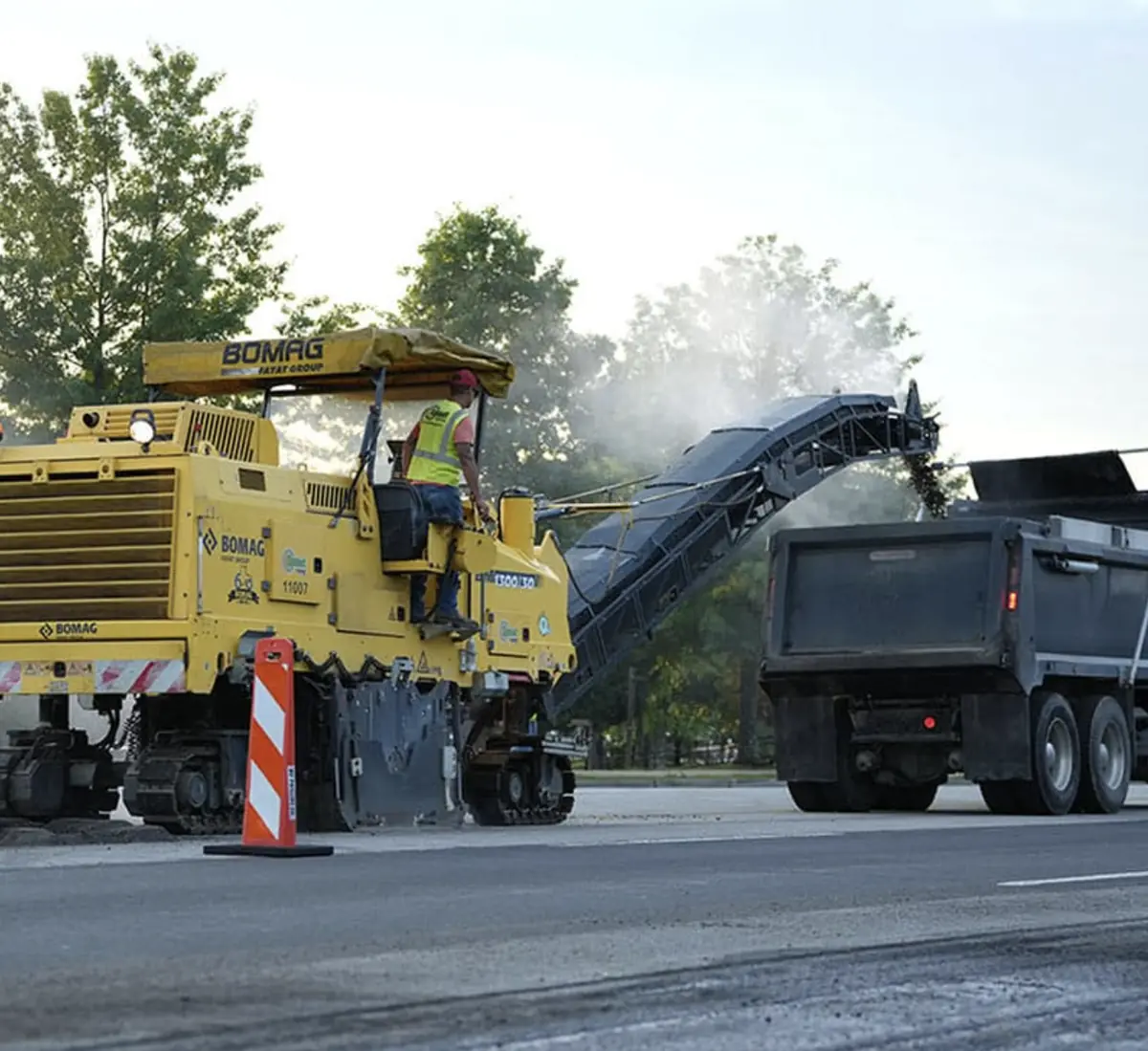
A milling machine carries a steel drum fitted with carbide teeth. The drum spins against the pavement and grinds it to a set depth, and a conveyor loads the ground material straight into a dump truck. Water sprays on the drum to keep dust down.
We mill for three reasons. The first is height. An overlay adds 2 inches, and without milling that buries curbs, blocks drains and puts the pavement above door thresholds. The second is to remove damage that only goes as deep as the top layer. The third is grip. The grooved surface a mill leaves behind bonds to new asphalt better than a smooth one.
Full width or edges only
You don't always need the whole surface taken off. On many lots we mill a 6 foot strip along the curbs and at each entrance, then taper the overlay down to meet them. That's edge milling, and it costs much less. Full-width milling makes sense when the surface is badly worn everywhere or the lot has no height to spare.
Where the millings go
The ground material is called RAP, short for recycled asphalt pavement. Asphalt plants blend it back into new mix, usually at 15 to 20 percent. Millings also make a decent surface for rural driveways and overflow parking. If you want them left on site, say so and we'll stockpile them where you choose.
How a milling job runs
- Mark and set depth. We locate valve boxes, manholes and drains and paint them so the operator can lift the drum over each one. Depth is set from what the cores showed.
- Mill in passes. The machine works in overlapping passes, each 4 to 7 feet wide, loading a truck as it goes. A skid steer with a small mill head cleans up corners and tight spots.
- Sweep. A power broom clears the loose material so the tack coat can stick.
- Inspect and pave. With the top layer gone, soft spots in the base are easy to see. We mark and repair them, then lay the new surface, usually within 24 to 48 hours.
Dallas lots that have been overlaid too many times
Many older Dallas lots have been overlaid two or three times without milling. You can tell by the curbs. They were built 6 inches tall and now show 2 or 3. Short curbs let storm water jump onto sidewalks and into storefronts, and wheel stops end up half buried.
Milling those lots back down restores the curb height and the drainage in one pass. It often uncovers the original drain inlets too, which earlier overlays partly paved over.
A milled surface can carry traffic for a few days. It's rough and noisy to drive on, and loose stones chip paint, so we plan the paving to follow as closely as the plant schedule allows.
What it costs
Milling alone typically runs $0.50 to $1.50 per square foot, depending on depth and how open the site is. The machine arrives on a lowboy trailer, so small jobs carry a mobilization charge. Most people buy it as part of a mill and overlay at $2 to $4 per square foot combined. For large commercial properties, we price milling as its own line so you can see it.
Milling questions
How much asphalt can you mill in a day?
About an acre, or 43,000 square feet, at 2 inches deep with a full-size machine on an open lot. Lots with islands, light poles and tight corners go slower.
Is milling loud or dusty?
Loud, yes. It's about as noisy as a large truck plus the grinding. Dust is low because the drum is sprayed with water. For retail and medical sites we can mill at night.
Can I keep the millings?
Yes. Tell us before the job and we'll leave them in a pile where you want it. They work well on rural drives, farm lanes and overflow parking.
Related pages
Curbs disappearing under old asphalt?
We'll core the lot, measure the curb height and tell you how deep to mill.