Parking Lot Paving in Dallas, TX
New lots and full rebuilds for shops, churches, offices and apartment communities. Graded to drain, paved in two lifts, and phased so people can still get in.
A parking lot is a drainage project
Water that sits on a lot finds its way into the base, and a wet base on Dallas clay goes soft. So the work starts with grades. Paving comes last.
The standard build for car traffic is 6 inches of flex base under 3 inches of hot mix. Drive lanes, dumpster routes and delivery areas get 8 inches of base and 4 inches of asphalt, because one loaded garbage truck does the damage of thousands of cars.
We pave in two lifts. The first is a coarse base course, TxDOT Type B, which carries the load. The second is a fine Type D surface course about an inch and a half thick. That's the smooth layer you see and drive on.
A lot needs a rebuild when more than about a third of it shows alligator cracking, or when potholes keep returning in the same places. Both mean the base is gone. If the damage is limited to a few areas, resurfacing or pothole repair costs far less.
Check the city rules before you budget. Some Dallas suburbs require concrete for new commercial parking and fire lanes, and allow asphalt only on existing lots or in certain zones. We confirm what your city permits at your address before we price the job.
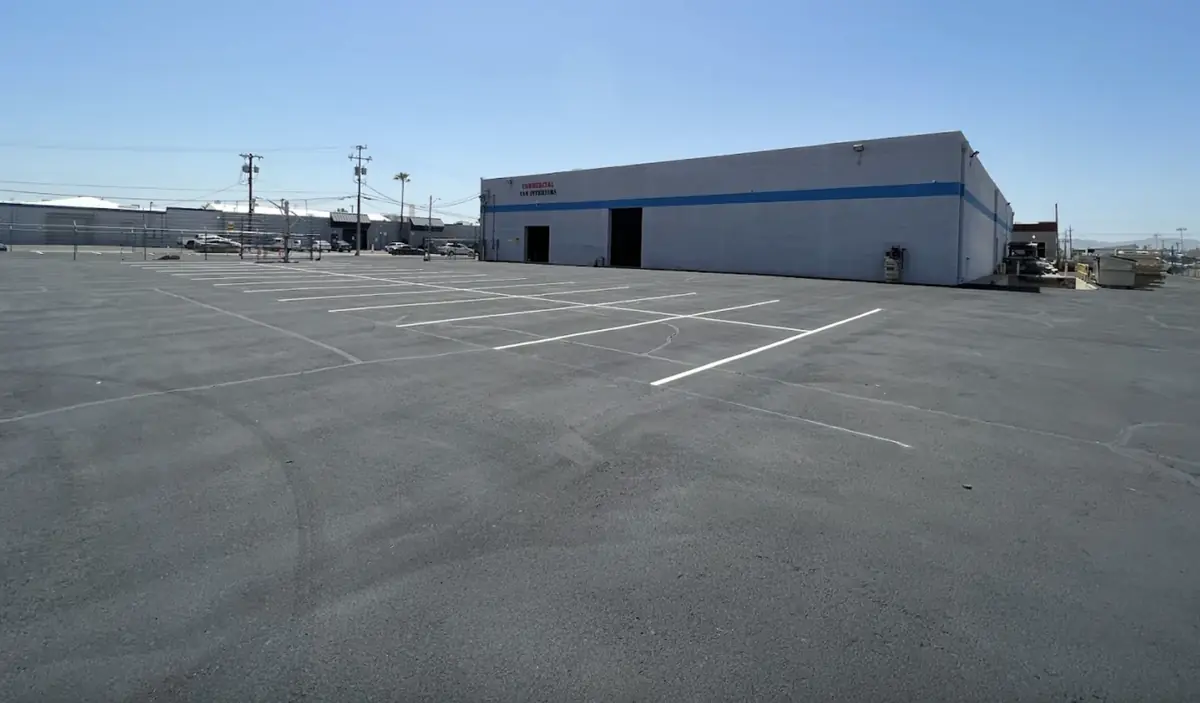
How we build a lot
- Survey and plan. We shoot grades with a laser level, mark the low spots and agree a phasing plan with you. Most lots get paved in halves so one entrance is always open.
- Grade and stabilize. High spots get cut and low spots filled. On heavy clay we mix lime into the top 6 inches of subgrade, which dries it and stiffens it. Then the flex base goes in and gets compacted.
- Pave two lifts. The Type B base course goes down first. We spray a tack coat on it so the layers bond, then lay the Type D surface and roll it until the roller leaves no marks.
- Stripe and reopen. Lines go down the next day. Cars can use each phase 24 hours after paving, and we move the barricades to the other half.
Built for Dallas storms and Dallas heat
A Dallas thunderstorm can drop two inches of rain in an hour. We slope every lot 1 to 2 percent toward inlets or the curb line. Under 1 percent, puddles form. After rolling we check with a level and fix any low spot while the asphalt is still hot enough to work.
Heat is the second problem. Pavement here passes 140 degrees on a July afternoon, and standard binder softens enough for trucks to push it into ruts. For lots with regular truck traffic we order a stiffer binder from the plant, PG 70-22 in place of the usual PG 64-22.
What it costs
A new asphalt lot with base typically runs $3 to $6 per square foot in Dallas. A 20 space lot is about 6,500 square feet with its drive aisle, so $19,500 to $39,000. Lime stabilization, drainage structures and curbs are priced as separate lines. Our parking lot cost guide breaks the numbers down by lot size.
Parking lot questions
Can my business stay open while you pave?
Yes. We pave most lots in two or three phases so an entrance and some parking stay open throughout. For restaurants and retail we can do the busy half at night.
How many parking spaces fit on my lot?
About one space per 300 to 325 square feet once drive aisles are counted. A 10,000 square foot lot holds roughly 30 cars with 9 by 18 foot stalls and 24 foot aisles.
When does a new lot need its first sealcoat?
6 to 12 months after paving. New asphalt has to cure and lose its surface oils first. After that, every 2 to 3 years keeps the Dallas sun from drying it out.
Related pages
Planning a lot or a rebuild?
We'll walk it, shoot the grades and price each phase as its own line.