Sealcoating in Dallas, TX
Two coats of sealer over clean, crack-filled asphalt. It blocks sun and water, turns gray pavement black again, and costs a fraction of new asphalt.
What sealcoat does
Sealcoat is asphalt emulsion mixed with water, fine sand and a few additives, applied in thin coats. The binder in asphalt reacts with sunlight and air. It turns gray, goes brittle, and starts letting go of the small stones at the surface. Sealer puts a sacrificial layer between the binder and the sun.
It also closes the surface to water and to oil and gas drips, which dissolve asphalt. And it makes an old lot look new, which matters if you're leasing space.
What it can't do is repair anything. Sealcoat has no strength. It won't bridge a crack wider than a hairline, fill a pothole or hold together a surface that's alligator cracked. Anyone who says sealcoat will fix a failing lot is selling you paint.
When to do it
New asphalt needs 6 to 12 months to cure before its first coat. After that, plan on every 2 to 3 years in Dallas. There's a simple check. Pour a cup of water on the surface. If it soaks in and darkens the pavement, it's time. If it beads, wait.
We add 2 to 4 pounds of silica sand to each gallon. Sand gives tires something to grip in the rain and helps the coat wear longer.
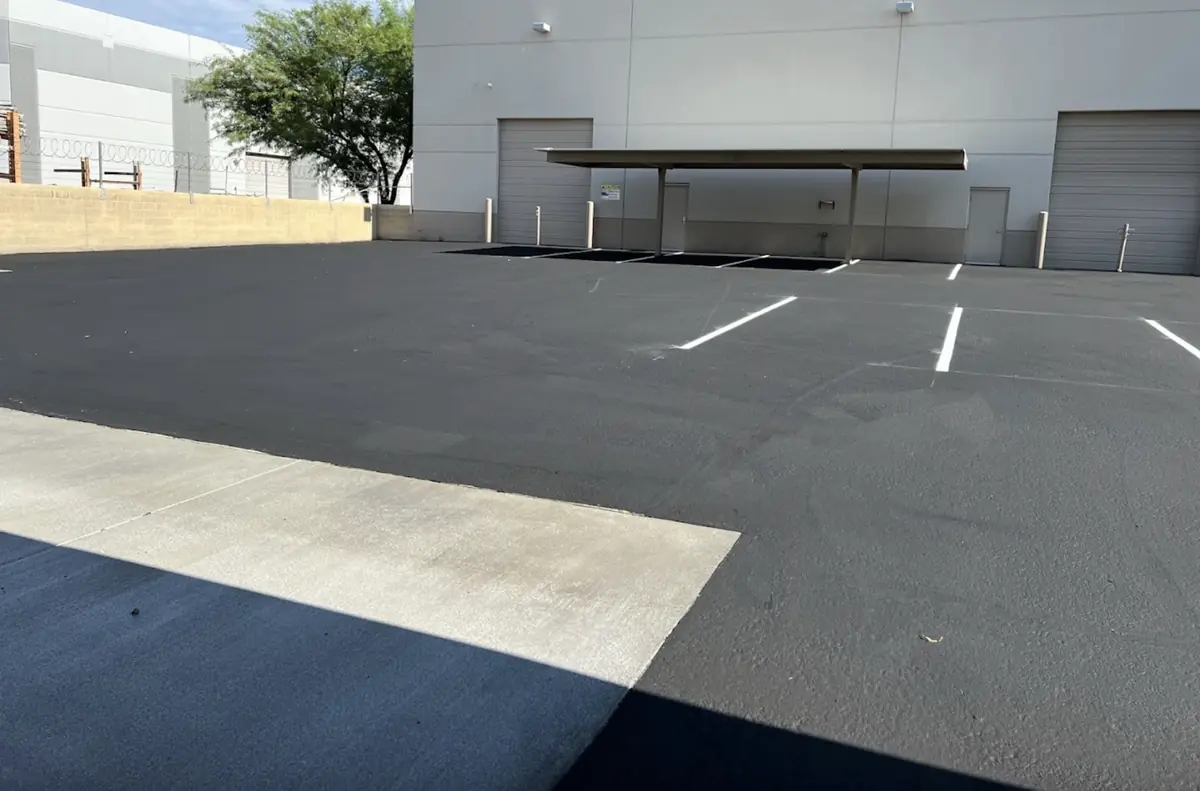
How we sealcoat
- Clean. Blowers and wire brooms take off dirt and loose stone. Oil spots get scrubbed and primed, because sealer peels off oil.
- Fill the cracks. Cracks from a quarter inch to an inch get hot rubberized sealant. This happens first so the sealcoat covers the repair.
- Apply two coats. The first coat goes on by squeegee or spray. The second follows once the first is dry to the touch, usually one to two hours in warm weather.
- Block it off and cure. We barricade the area for 24 to 48 hours. Striping goes down after the sealer has cured, so the paint stays bright.
Sealcoating in Dallas weather
Sealer needs air and pavement at 50 degrees and rising, and no rain for 24 hours. Dallas gives us a long season, roughly March through November.
Summer has its own rule. Once the pavement passes about 130 degrees, water flashes out of the sealer too fast and the coat dries streaky. In July and August we start at first light and stop by early afternoon. If we tell you a midday start won't work, that's why.
Shade matters as well. The north side of a building and areas under live oaks cure more slowly, so those stay barricaded longest.
What it costs
Parking lots typically run $0.15 to $0.35 per square foot for two coats. Driveways cost more per foot because of setup, and most land between $250 and $600. Crack sealing and re-striping are separate lines on the quote. Compare that with $2 to $4 per square foot to resurface, and regular sealing is the cheapest money you'll spend on pavement.
Sealcoating questions
How long does sealcoat take to dry?
4 to 8 hours before you can walk on it and 24 to 48 hours before you drive on it. Shaded areas and cool, humid days take the longest.
Will sealcoating fill cracks?
No. Sealer only bridges hairline cracks. Anything wider than a quarter inch needs hot rubberized crack sealant first, or the crack shows again within weeks.
Is spray or squeegee better?
Squeegee works sealer into rough, worn surfaces, and spray gives an even finish on smoother ones. On older lots we often squeegee the first coat and spray the second.
Related pages
Is your asphalt going gray?
We'll measure it and tell you if it needs sealer now or can wait another year.